BTC
 USDT / BWP
 ETH / BWP
 SOL / BWP
On this page
Quick answer: bitcoin in one minute
Bitcoin is a digital currency that runs on a public blockchain with no company or central bank behind it. Its supply is capped at 21 million coins, and about 20.12 million (roughly 96%) had been issued by late November 2026. You never have to buy a whole coin: the smallest unit, one sat, is 0.00000001 BTC.
In Botswana no exchange offers a pula bitcoin market. You either pay by Visa or Mastercard on an international exchange, which turns your pula into dollars, or you buy USDT on a pula P2P market and swap it for bitcoin. Both routes cost more than the headline price, and the headline price itself fell by about half between October 2025 and November 2026.
What bitcoin is and what it’s for
Bitcoin’s network started with its genesis block on 3 January 2009, following a whitepaper by the pseudonymous Satoshi Nakamoto. Thousands of computers keep identical copies of the ledger, so no single company can quietly change it or print extra coins.
New coins come from mining. Miners compete using proof of work (SHA-256) and add a block roughly every 10 minutes. Each block pays the winning miner a reward of new bitcoin, and that reward is cut in half every 210,000 blocks in an event called the halving. That schedule is why supply can never pass 21 million.
-
28 Nov 2012
First halving
Block 210,000: reward 50 → 25 BTC
-
9 Jul 2016
Second halving
Block 420,000: reward 25 → 12.5 BTC
-
11 May 2020
Third halving
Block 630,000: reward 12.5 → 6.25 BTC
-
20 Apr 2024
Fourth halving
Block 840,000: reward 6.25 → 3.125 BTC
-
About Apr 2028
Next halving (estimate)
Block 1,050,000: reward 3.125 → 1.5625 BTC
Bitcoin is now widely held through investment products: in the US, the Securities and Exchange Commission approved spot bitcoin funds on 10 January 2024, describing them as holding “one non-security commodity”. As a payment method it has struggled even where the law once required shops to accept it: in El Salvador the share of people who said they transacted in bitcoin fell from 25.7% in 2021 to 8.1% in 2024.
At home, the Bank of Botswana says crypto is not legal tender, and our research found no shops in Gaborone, Francistown, Maun or Kasane that take it. For Batswana, bitcoin is something you buy, hold and later sell for pula, not something you pay for groceries with.
Bitcoin price in pula
The live widget at the top of this page converts pula to bitcoin at a mid-market price. It reads Coinbase’s BWP rates first and falls back to CoinGecko’s dollar price multiplied by a USD/BWP feed. Our build-time snapshot on 23 Nov 2026 (11:41 UTC) put 1 BTC at about P874,076, or US$61,453 at roughly P14.22 per dollar.
P874,076
1 BTC at our snapshot
Coinbase, 23 Nov 2026, 11:41 UTC
US$126,080
All-time high
CoinGecko, 6 Oct 2025
≈51%
Below that high
At the same snapshot
Every pula price for bitcoin is a dollar price converted at some exchange rate. That is why the number moves even on a quiet day for bitcoin: the pula is managed against a basket of the rand and the IMF’s Special Drawing Rights, so its dollar rate shifts too. The Bank of Botswana’s own published rate for the same day was about P13.85 per dollar, roughly 3% stronger for the pula than the data feeds, which is why we label all our figures indicative.
For a full table from 0.0001 BTC up to one coin, and pula budgets in sats, use our bitcoin to pula converter. The price you are charged will be higher than mid-market because of fees and spread.
How to buy bitcoin in Botswana
You have two practical routes. Which one is cheaper depends on your card’s foreign-transaction fee and on the day’s P2P premium, so compare both with a small amount first.
Route 1. Card purchase on an international exchange
Our top pick for card purchases is CEX.IO. It does not list Botswana among its unsupported countries, Botswana Visa and Mastercard cards are not on its card block lists, and it accepts a national ID card such as the Omang for KYC. Its card fee is 0.49%–4.99% plus a service charge. Your bank converts the pula and may add about P6–P9 per international transaction plus a currency margin on some cards (Absa lists 3.82% on personal debit cards).
CEX.IO is licensed and registered abroad (US FinCEN MSB, NMLS 1804170; UK FCA FRN 1007192). It holds no NBFIRA licence, and Botswana customers contract with CEX OVRS LLC in Nevis. New accounts are capped at US$1,000 a day and US$3,000 a month by card for their first three months, and the Instant Buy minimum is US$20 (about P284).
Buying bitcoin by card
-
Open and verify an account
Register at cex.io, choose Botswana as your country and upload your Omang or passport plus a selfie. Botswana has no postcodes; the form accepts six zeros (000000). -
Check your card
Use a debit Visa or Mastercard enabled for online and international payments. CEX.IO warns that most prepaid cards fail, so prepaid Visa cards linked to Orange Money, MyZaka or Smega may be declined. -
Enter a pula budget and read the quote
Pick BTC, enter the amount and look at the card fee and the BTC you will receive. Start small, for example the US$20 minimum. -
Approve the payment
Confirm the 3D Secure prompt or OTP from your bank. Make sure your phone has signal, or the payment fails. -
Decide where the bitcoin stays
Leave it on the exchange behind app-based 2FA, or withdraw it to your own wallet after a small test.
Route 2. Pula P2P for USDT, then a swap
Binance P2P showed zero BTC adverts in pula when we checked; the pula market trades USDT. So you buy USDT on Binance or OKX P2P with Orange Money, a bank transfer or (on Binance) FNB eWallet or Stanbic, then swap the USDT for bitcoin on the exchange’s spot market. Binance’s spot fee for regular users is 0.10%. Our P2P guide covers the escrow steps and fraud checks.
The P2P premium is the hidden cost. The best adverts to buy USDT on 23 Nov 2026 were P15.38 on Binance and P15.00 on OKX. At P15.38, P1,000 buys about 65 USDT, which bought roughly 0.00106 BTC at the snapshot price, against about 0.00114 BTC at mid-market. That gap of around 7% is the price of paying with Orange Money.
Buy bitcoin with a Botswana card
Verify with your Omang, start with a small amount and read the full quote, including your bank’s foreign-transaction fee, before you approve.

Networks, fees and withdrawals
Bitcoin moves on the Bitcoin network, and exchanges charge a flat withdrawal fee in BTC whatever the amount. These were the fees in our late-November check, converted at the snapshot price:
| Exchange | BTC withdrawal fee | About, in pula |
|---|---|---|
| Binance | 0.00002 BTC | P17 |
| Bitget | 0.00002 BTC | P17 |
| CEX.IO | 0.000048 BTC | P42 |
| KuCoin | 0.00008 BTC | P70 |
Because the fee is flat, it hurts small amounts most. Withdrawing P300 worth of bitcoin from CEX.IO costs about P42, or 14%. CEX.IO’s minimum withdrawal is 0.000185 BTC (about P162) and its minimum deposit is 0.000075 BTC. Transfers between CEX.IO accounts through CEX.IO Pay are free.
Some exchanges also offer bitcoin withdrawals over the Lightning Network, but support varies: Binance had Lightning withdrawals switched off on 23 Nov 2026, while KuCoin allowed them for 0.00002 BTC. Whatever route you use, the receiving wallet must support the same network. Send a small test first and track it on a block explorer such as mempool.space before sending the rest.
Risks to know
Price is not the only risk. On 29 October 2026 Binance was hacked and about US$6.3 billion of client assets were taken; withdrawals were paused until 1 November. An exchange account is a promise from a company, and none of the big international exchanges holds an NBFIRA licence, so a Botswana regulator cannot step in if one fails. The Bank of Botswana has said the public has no recourse to it for crypto losses.
Treat any promise of fixed daily returns as a scam signal. In the first half of 2023, 116 of the 165 suspicious transaction reports filed with Botswana’s Financial Intelligence Agency involved crypto. An FCA warning in July 2026 concerned a clone site using the CEX.IO name, so type the exchange address yourself rather than following links in messages.
Tax is the last surprise. BURS has published no crypto guidance, so general rules apply. Under the Income Tax Act in force from 1 July 2026, any capital gains tax an individual owes is due within 28 days of a sale, so keep a record of every purchase in pula.
Storing it safely
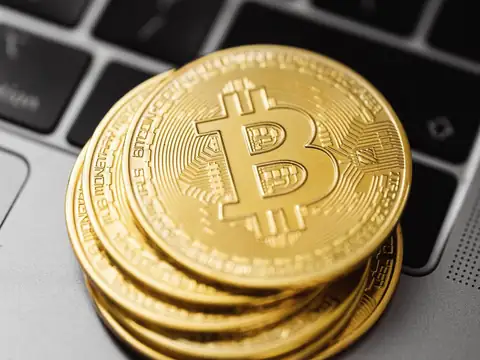
Where you keep bitcoin decides who can lose it. On an exchange, the company holds the keys in a custodial wallet. That is convenient and lets you sell quickly, but you depend on that company’s security and solvency.
In a self-custody wallet only you hold the keys. Nobody can freeze it, and nobody can reset it if you lose your seed phrase, the 12 or 24 words that restore the wallet. A hardware wallet keeps those keys offline; buy one only from the maker or an authorised reseller.
Before you hold bitcoin
- Exchange login protected with an authenticator app, not SMS codes
- Seed phrase written on paper and stored offline, never photographed
- A small test withdrawal done before any large one
- Purchase dates and pula amounts saved for tax
- Exchange address typed by hand, not opened from a WhatsApp link
SMS codes are weak because of SIM swap fraud, where someone moves your number to their SIM. An authenticator app avoids that.
Who it suits
Bitcoin fits a narrow set of goals. It can make sense as a small, long-term holding for someone who understands that the price can fall by half and stay there for months. It suits people less if the money is needed for rent or school fees soon, or if the plan is to send money to family, because the pula P2P markets trade USDT and bitcoin withdrawals carry flat fees.
What it does for Botswana users
- Fixed maximum supply of 21 million coins
- Buyable in tiny amounts: P100 was about 11,400 sats at our snapshot
- Withdrawal fees from 0.00002 BTC (about P17) on Binance and Bitget
- Botswana Visa and Mastercard accepted for card purchases on CEX.IO
What it does not do
- About 51% below its 6 Oct 2025 high at our snapshot
- No pula bitcoin market: 0 BTC adverts on Binance P2P
- None of the big international exchanges holds an NBFIRA licence
- Card buyers pay 0.49%–4.99% plus their bank’s foreign-transaction fee
A simple rule: decide the pula amount you could lose without changing your plans, buy no more than that, and write down why you bought it. If the reason was a WhatsApp tip or a promise of fixed returns, stop.
Frequently asked questions
Q01How do I buy bitcoin in Botswana?
Q02How much is one bitcoin in pula?
Q03What is the minimum I can buy?
Q04Is bitcoin legal in Botswana?
Q05Where should I keep my bitcoin?
Sources we checked
- Bitcoin whitepaper (Satoshi Nakamoto)
- CoinGecko: bitcoin halving history and next halving
- SEC: statement on the approval of spot bitcoin ETPs (10 Jan 2024)
- Bloomberg: what triggered the February 2026 bitcoin sell-off
- CNBC: Tether and Circle freeze funds after the Binance security incident (29 Oct 2026)
- Bank of Botswana: statement on crypto assets (10 Nov 2021)
- BTC Botswana: Smega mobile money
Risk note: crypto prices can fall sharply and you can lose all the money you put in. This page is general information, not financial, legal or tax advice. Fees, limits and licences change; check them with the provider and on NBFIRA’s register before you act.