On this page
The card route in one minute
Paying by card means you buy straight from an exchange with your Visa or Mastercard. You pay in pula, your bank converts the amount to US dollars, and the exchange credits the crypto to your account. There is no stranger to pay and no P2P premium, but there are three costs stacked on top of each other: the exchange’s card fee, your bank’s charges and any spread inside the quoted price.
It suits you if you already have a verified account, want the purchase done in one sitting and are buying within the limits for new customers. It suits you less if your bank charges a high FX margin, or if your only card is a prepaid one.
Exchanges that take Botswana-issued cards
We checked each platform’s own country and card lists. Only one confirms that a Botswana card works.
| Platform | Botswana cards | Card fee | Notes |
|---|---|---|---|
| CEX.IO | Yes, on no block list | 0.49%–4.99% + service charge | US$20 minimum; no pula wallet |
| Bybit | No | — | One-Click Buy list leaves Botswana out |
| VALR | Via MoonPay, not confirmed | MoonPay up to 4.5% + 0.5% VALR | Credited as USDC |
| Paybis | Botswana not restricted | Not published for pula cards | Card broker |
| Binance, OKX | Not confirmed | — | Use P2P with pula instead |
CEX.IO has run since 2013 and serves Botswana through its Nevis company, CEX OVRS LLC. It is licensed and registered abroad (US FinCEN MSB, NMLS 1804170; UK FCA FRN 1007192) and holds no licence from NBFIRA, Botswana’s crypto regulator. Our CEX.IO review covers its other features and limits.
Binance and OKX may sell crypto by card in other countries, but we found no official page confirming it for Botswana cards, so we leave them out of the card route. For pula, both run P2P markets where you pay a seller by Orange Money or bank transfer instead.
Your first card purchase, step by step
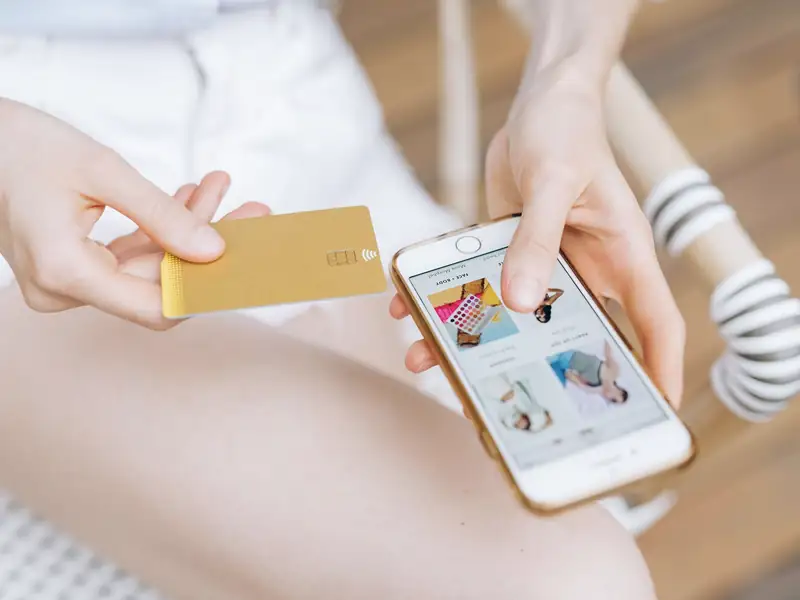
Buy crypto with a Botswana card on CEX.IO
-
Register and verify
Sign up, then complete KYC with a national ID card in Latin script (the Omang fits) or a passport, plus a selfie. A correct submission is usually checked within five minutes. Botswana has no postcodes, so enter 000000 if the form asks for one.
-
Prepare your card
Check that your card can pay online and abroad, that your phone has signal for the one-time code, and that any VPN is switched off.
-
Enter the amount
Choose Buy, pick the coin and enter at least US$20 (about P287). The quote shows the card fee and the service charge before you pay.
-
Confirm and approve
Confirm the quote, then approve your bank’s 3D Secure prompt or enter the code before it expires.
-
Check your statement
When the payment clears, compare the pula amount on your statement with the dollar amount on the quote. The gap is your bank’s fee and FX margin.
If the exchange asks for proof of address, a bank statement PDF from online banking, no older than three months, is accepted. Our Omang and KYC guide covers the document checks in more detail.
Use the card already in your wallet
Our #1 pick accepts Botswana Visa and Mastercard. Verify with your Omang or passport, start with a small purchase and check the full quote, including the service charge, before you confirm.

The real cost: exchange fee + bank FX + spread
The exchange’s fee is only one layer. Your bank charges a flat fee per purchase abroad, P6–9 at most banks, and some banks add a published foreign transaction fee: 3.82% on an Absa debit card, 3.76% on a Standard Chartered credit card, 2.78% on a Stanbic credit card and 4% on First Capital’s Platinum and USD cards. FNB lists P7.42 per purchase and no percentage, but it converts at its own unpublished rate.
| On a P1,000 purchase | Low end | High end |
|---|---|---|
| Exchange card fee (0.49%–4.99%) | P4.90 | P49.90 |
| Bank fee per payment | P6 | P9 |
| Bank FX margin (2.8%–4%) | P28 | P40 |
| Published total | P38.90 (3.9%) | P98.90 (9.9%) |
On top of that comes the service charge, which CEX.IO says “varies by provider and country”, and any spread inside the instant buy price, which CEX.IO does not publish. For comparison, a P1,000 order from the cheapest pula P2P seller in our November check cost about 5% all in. A card can beat that, but only when both the exchange fee and your bank’s margin sit near the low end.
Two habits keep the cost down. Buy in one larger payment rather than several small ones, because the bank’s P6–9 is charged per payment. And screenshot the quote, so you can match it line by line against your statement.
3D Secure, limits and why cards get declined
3D Secure is the one-time PIN or app approval your bank asks for during an online payment. If the code does not reach your phone in time, the payment fails. Botswana banks do not publish how their 3D Secure works, so if no code arrives, call your bank rather than retrying.
CEX.IO’s own limits catch many first-time buyers. For the first three months after verification, a new customer can deposit at most US$1,000 a day and US$3,000 a month by card. Only three successful card deposits are allowed per day, and Instant Buy has a US$3,000 transaction limit that rises after address verification.
Before you retry a declined card
- Switch off any VPN; CEX.IO lists VPNs as a decline cause
- Make sure your phone has signal for the 3D Secure code
- Check that your card is enabled for online and international payments
- Check your bank’s daily limit and the exchange’s new-user cap
- If it is a prepaid or wallet card, try a bank debit card instead
No Botswana bank has published a rule against paying crypto exchanges, and we found no evidence either way on whether they block such payments.
Prepaid and wallet-linked Visa cards
All three mobile wallets offer a Visa card. Orange Money’s is virtual: you create it in the Max it app, fund it from the wallet, and since April 2026 it uses Visa 3D Secure. The MyZaka Visa costs P25 from Mascom shops and charges P5 for each declined transaction. The Smega Visa prepaid card costs P35 and P2.04 per online payment.
The problem is the word prepaid. CEX.IO’s help centre says prepaid cards are “technically possible”, but “most prepaid card transactions are not successful, especially when it comes to withdrawing funds.” If a wallet card is your only card, pay a P2P seller with Orange Money instead.
Credit card vs debit card
CEX.IO says debit cards “statistically see 25% fewer declines” than credit cards, which alone makes debit the easier first choice. The published margins also differ by card type: Standard Chartered’s credit card has no fee per purchase abroad but a 3.76% conversion fee, while Stanbic’s credit card charges P7.30 plus 2.78%.
Whether a bank treats a crypto purchase on a credit card as a cash advance, with its extra fees and interest from day one, is not stated in any Botswana tariff guide we read. Ask your issuer first. Crypto has high volatility: a coin bought on credit can lose value while the interest keeps running.
A debit card also works in reverse. CEX.IO pays card withdrawals to Visa within up to 48 hours (US$20–US$50,000 a day) and to Mastercard within up to an hour (US$20–US$2,500 a day). Your bank then converts the dollars into pula at its own rate. Withdrawals to prepaid cards mostly fail.
Apple Pay, Google Pay and PayPal
CEX.IO accepts Google Pay and Apple Pay for deposits of US$20–US$1,000 a day, with no withdrawals back to them. Whether Botswana-issued cards can be added to Apple Pay or Google Pay is something we could not confirm, so check your bank’s app before counting on it.
PayPal appears among CEX.IO’s Instant Buy methods, but with “availability by jurisdiction”, and Botswana is not named. No other platform we checked offered PayPal to buyers in Botswana. Some Batswana already pay online this way: in the 2024 Statistics Botswana ICT survey, 12.3% of people who shopped online used PayPal-type services, and FNB runs a PayPal withdrawal service at 1.68%. A crypto purchase through PayPal from Botswana remains unconfirmed, so treat any seller who insists on PayPal outside an exchange as a warning sign.
Frequently asked questions
Q01Which exchanges accept Botswana Visa or Mastercard?
Q02How much does a card purchase cost in total?
Q03Why was my card declined?
Q04Can I use the Orange Money virtual Visa?
Q05Is buying crypto with a credit card a cash advance?
Q06Can I buy crypto with PayPal in Botswana?
Sources we checked
Risk note: crypto prices can fall sharply and you can lose all the money you put in. This page is general information, not financial, legal or tax advice. Fees, limits and licences change; check them with the provider and on NBFIRA’s register before you act.