SOL
 USDT / BWP
 BTC / BWP
 ETH / BWP
On this page
Quick answer: Solana in one minute
Solana is a blockchain built for speed, and SOL is its coin. SOL pays transaction fees and is staked by validators who run the network. It is the seventh-largest coin by market value in our snapshot, and USDT also runs natively on Solana.
From Botswana you buy SOL by card on an international exchange or through a pula P2P purchase of USDT followed by a swap. Fees to move SOL are small, about P1 on some exchanges, but the network has a record of outages and the price was about 75% below its high in late November 2026.
What Solana is and what it’s for
Solana was founded in 2018 by Anatoly Yakovenko and Raj Gokal, and its first block was produced on 16 March 2020. It uses proof of stake: validators lock SOL to produce blocks and earn rewards. Before its 2026 upgrade, Solana produced slots of about 400 milliseconds and reached final confirmation in about 12.8 seconds.
Solana is a smart-contract platform: it hosts tokens, including USDT issued natively by Tether, and the apps built around them. Holders can also stake SOL; the first US spot Solana fund under the 1933 Act, Bitwise BSOL, began trading on 28 October 2025 and stakes its SOL, citing average staking rewards of about 7%. Rewards are not guaranteed.
SOL has no maximum supply. About 592 million were circulating and 638 million existed in total in late November 2026. Solana’s design starts inflation at 7–9% a year and lowers it each year towards 1–2% in the long run; we could not confirm the exact live parameters.
Alpenglow and Firedancer
Two technical changes matter for anyone reading Solana news:
-
Dec 2025
Firedancer full client on mainnet
A second validator client, built by Jump Crypto, reported live
-
May 2026
Gated Firedancer roll-out
Reports describe an audit-dependent, step-by-step release to validators
-
21 Oct 2026
Alpenglow (Votor) activated
Epoch 1064, Agave 4.3; targets about 150 ms finality
Alpenglow replaces Solana’s old voting system and targets final confirmation in about 150 milliseconds, against about 12.8 seconds before. A second phase, called Rotor, is due later. We could not find an outside measurement of finality since activation, so treat 150 ms as the target rather than a measured result.
Firedancer is a second validator client, the software validators run, written by Jump Crypto. It was reported live as a full client in December 2025, and reports from May 2026 describe a gated roll-out that depends on audits. We could not confirm what share of Solana’s stake runs on Firedancer.
Solana price in pula
The converter at the top of this page shows the live mid-market pula price. Our build snapshot on 23 Nov 2026 showed 1 SOL at about P1,034, or US$72.68 at roughly P14.22 per dollar. As with every coin, that is a dollar price converted into pula; there is no pula SOL market.
P1,034
1 SOL at our snapshot
Coinbase feed
US$293.31
All-time high
CoinGecko, 19 Jan 2025
≈75%
Below that high
At the same snapshot
SOL’s history is full of sharp drops. During the FTX collapse in November 2022 it fell 40% in one day, driven by Alameda Research selling; FTX held $982 million of SOL. In June 2023 it fell nearly 30% after US Securities and Exchange Commission lawsuits against two exchanges described SOL as a security, and Robinhood delisted it. No court ruled on that point, and the SEC dismissed its Binance case with prejudice on 29 May 2025.
How to buy Solana in Botswana
By Visa or Mastercard
Our top pick for card purchases is CEX.IO, which supports Botswana and accepts Botswana-issued Visa and Mastercard cards. Check that SOL is on its buy list on the day; it already lists USDT on the Solana network. Its card fee is 0.49%–4.99% plus a service charge, and your bank adds a foreign-transaction fee because the pula is converted into dollars. Our card guide lists those bank fees.
You verify with an Omang or passport and a selfie, and new accounts are capped at US$1,000 a day and US$3,000 a month by card for three months. CEX.IO is licensed and registered abroad (US FinCEN MSB, NMLS 1804170; UK FCA FRN 1007192), holds no NBFIRA licence and has no pula wallet.
Buying SOL by card
-
Verify your account
Register, choose Botswana and upload your Omang or passport and a selfie. Confirm SOL is on the buy list. -
Check your card
Use a debit Visa or Mastercard enabled for international online payments; prepaid wallet cards may fail. -
Enter a pula budget
Choose SOL and read the quote: card fee, rate and the SOL you will receive. -
Approve the payment
Confirm your bank’s 3D Secure prompt or OTP. -
Withdraw on the Solana network
If you move it, pick the Solana network and send a small test first.
Through pula P2P and a swap
On the Binance and OKX pula P2P markets you can buy USDT with Orange Money or a bank transfer, then swap it for SOL on the spot market. On 23 Nov 2026 the best adverts to buy USDT were P15.00 (OKX) and P15.38 (Binance), about 5–7% above the mid-market dollar rate. Compare that premium with your card’s total cost (card fee plus bank fee) before choosing a route.
Buy SOL with a Botswana card
Check that SOL is on the buy list, start small and read the full pula cost, including your bank’s fee, before you approve.

Networks, fees and withdrawals
SOL moves on the Solana network. A Solana fee has two parts: a base fee and an optional priority fee that buys faster inclusion when the network is busy. Since the SIMD-0096 change, the whole priority fee goes to the validator that processes the transaction. We could not confirm the current share of the base fee that is burned.
What you will see in practice is an exchange’s flat withdrawal fee. In our late-November check:
| Exchange | SOL withdrawal fee | About, in pula | USDT on Solana |
|---|---|---|---|
| Binance | 0.001 SOL | P1 | 0.7 USDT |
| Bitget | 0.001 SOL | P1 | 0.5 USDT |
| KuCoin | 0.008 SOL | P8 | 1.5 USDT |
| CEX.IO | not checked | — | 1 USDT |
Pula amounts use the snapshot price of P1,034 per SOL. Because fees are so small, a withdrawal error costs you far more than the fee ever would. The receiving wallet must list the Solana network, and you can follow any transfer on a block explorer such as solscan.io.
USDT on Solana
Tether issues USDT directly on Solana, so it is not a bridged copy. That makes Solana one of the cheaper ways to move dollars: in our check, withdrawing USDT on Solana cost 0.5–1.5 USDT depending on the exchange, against 1.5–3 USDT on Tron. The catch is the same as for any network: the person or exchange receiving it must accept USDT on Solana. Trades on the Binance and OKX pula P2P markets settle inside the exchange, where no network is used at all, so if someone asks you to send USDT on Solana, confirm their wallet supports it first.
Risks to know
Outages. Solana has stopped producing blocks several times. The network restarted each time, and a public history by Helius reports no full halt since February 2024.
-
14 Sep 2021
About 17 hours
Bot surge during a token sale
-
1 May 2022
About 7 hours
Bot traffic
-
31 May 2022
About 4.5 hours
Durable-nonce bug
-
30 Sep 2022
About 6 hours
Misconfigured node triggered a consensus bug
-
Feb 2023
About 19 hours
Oversized block overwhelmed the data-sharing layer
-
6 Feb 2024
About 5 hours
Program-loading bug
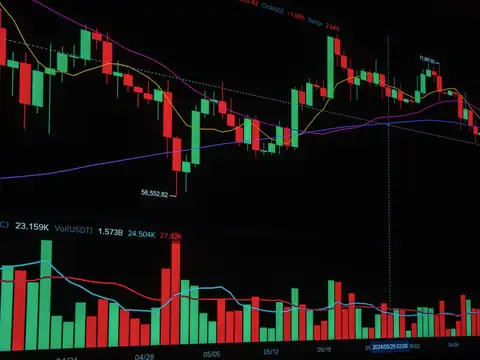
Price. At our snapshot SOL was about 75% below its January 2025 high, a bigger fall than bitcoin (about 51%) or ether (about 65%). That volatility runs both ways, and nobody can tell you which way comes next. Size any purchase so a further halving would not change your plans.
Wallet and app risk. On 3 August 2022 a compromise linked to the Slope wallet drained about 9,231 Solana wallets of roughly $8 million. The network was not hacked; the wallet software was. Which app holds your keys matters as much as the coin.
Exchange risk. None of the big international exchanges holds an NBFIRA licence, and the 29 October 2026 Binance hack (about US$6.3 billion taken) showed that client funds on a platform are exposed to that platform’s security.
Storing it safely
Small amounts you plan to sell can stay on the exchange, protected by an authenticator app rather than SMS codes. Our wallets guide explains the trade-offs between keeping coins on an exchange and holding the keys yourself. For self-custody, choose a self-custody wallet that lists the Solana network, install it only from the maker’s official site and write the seed phrase on paper. Anyone who sees those words can empty the wallet, and nobody can reset them for you.
Before you move SOL
- Withdrawal network set to Solana, matching the receiving wallet
- Wallet app installed from the maker’s official site
- A small test transfer confirmed on solscan.io
- Seed phrase stored offline and never typed into a website
- Purchase dates and pula amounts saved for tax
Who it suits
SOL can suit someone who wants exposure to a fast, low-fee network, has read the outage record and accepts larger price swings than bitcoin. It suits people less as a store for money they need soon, or for anyone who would panic if the network paused for a few hours with their coins inside it.
What it does for Botswana users
- Exchange withdrawal fees of 0.001 SOL (about P1) on Binance and Bitget
- Alpenglow activated on 21 Oct 2026, targeting about 150 ms finality
- USDT is issued natively on Solana
- A second validator client (Firedancer) reached mainnet in Dec 2025
What it does not do
- About 75% below its 19 Jan 2025 high at our snapshot
- At least six network halts between Sep 2021 and Feb 2024
- No pula SOL market; P2P buyers pay a 5–7% premium via USDT
- No maximum supply
Write down how much pula you could lose without changing your plans, and buy no more than that. A tip on social media is not a reason to buy any coin.
Frequently asked questions
Q01How do I buy solana in Botswana?
Q02Why are Solana fees so low?
Q03Has Solana gone down before?
Q04Which wallet supports SOL?
Sources we checked
Risk note: crypto prices can fall sharply and you can lose all the money you put in. This page is general information, not financial, legal or tax advice. Fees, limits and licences change; check them with the provider and on NBFIRA’s register before you act.