On this page
Three kinds of wallet
A crypto wallet does not hold coins the way a purse holds notes. The coins stay on the blockchain; the wallet holds the secret that lets you move them. The question that matters is who holds that secret.
- An exchange account (Binance, OKX, CEX.IO and others) is a custodial wallet. The company holds the secret and you log in with a password.
- A self-custody app on your phone is a self-custody wallet. Only you hold the secret, written down as a seed phrase.
- A hardware wallet is a small device that keeps the secret offline and signs each transfer itself.
Think of it like money. An exchange account is like a bank: it holds your money and can reset your PIN, but it can also freeze, fail or close. A self-custody wallet is your own safe at home: nobody can freeze it, and nobody can open it for you if you lose the combination.
Exchange
Company holds the keys
Password reset possible
App
You hold the seed phrase
No reset if lost
Device
Seed phrase plus offline signing
Buy from the maker
Exchange account: convenient, not yours
Keeping crypto on the exchange where you bought it is the easiest choice. You can sell it on P2P in a few taps, there is no seed phrase to protect, and if you forget your password the exchange can verify you again with your ID.
The cost is trust. Coins on an exchange are the company’s promise to pay you, and that promise has failed or paused often enough to plan for:
- About US$1.5 billion in ETH was stolen from Bybit on 21 February 2025; the FBI attributed it to North Korea.
- CNBC reported a security incident at Binance on 29 October 2026 in which about US$6.3 billion was taken. Withdrawals resumed on 1 November.
- Paxful shut down on 1 November 2025, and NoOnes closed its P2P market on 21 August 2026 with withdrawals allowed only until 23 August.
- Yellow Card closed its retail app on 1 January 2026, after a withdrawal window that ended on 31 December 2025.
Botswana law offers some protection, but only with licensed firms. Under the Virtual Assets Act 2025, customer assets held in custody by an NBFIRA licensee are not the firm’s property and cannot be claimed by its creditors. The big international exchanges Batswana use are not NBFIRA-licensed, so that rule does not cover your balance there.
The rule of thumb: keep on an exchange only what you are about to trade or sell, and switch on 2FA with an authenticator app.
Self-custody apps
A self-custody app turns your phone into a wallet. When you set it up, it shows a seed phrase, usually 12 or 24 words. Those words are the wallet. If your phone breaks, you install the app again, type the words, and your coins reappear.
Trust Wallet and MetaMask are two well-known examples; there are many others. We do not rank them here because we have not tested their features for this page. What matters more than the brand is how you install and use the app:
Installing a self-custody app safely
- Find the official website first, then follow its link to Google Play or the App Store
- Check the publisher name in the store matches the official website
- Write the seed phrase on paper during setup, never in a screenshot or note app
- Send a small test amount in and out before you move larger sums
- Set a phone screen lock and the app’s own PIN or fingerprint lock
Self-custody also changes your paperwork. Licensed Botswana VASPs must keep records of transfers to and from self-hosted wallets under the travel rule, and for transfers of P10,000 or more they collect fuller details about you. If an exchange asks who owns the wallet you are withdrawing to, answer truthfully.
Hardware wallets and getting one in Botswana
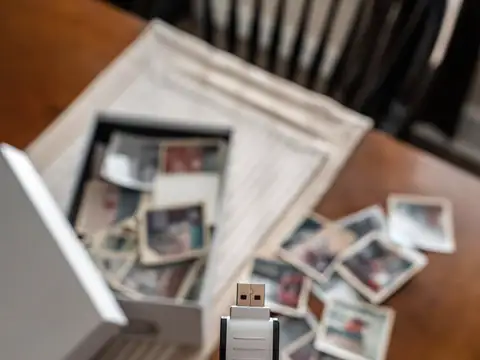
A hardware wallet is a small device, often the size of a USB stick, that stores the secret offline. When you send coins, the device shows the address and amount on its own screen and signs the transfer itself, so you check the details on the device rather than on a screen that malware could tamper with. This is what people mean by cold storage. Ledger and Trezor are two well-known makers.
You still get a seed phrase. The device can break or get lost; the words on paper are your backup. A hardware wallet protects you from online theft, not from losing your seed phrase.
Buying one from Botswana
We have no checked list of authorised sellers in Botswana, so plan to buy online with care:
- Order from the maker’s own website, or from a reseller that the maker’s website lists.
- Before paying, confirm the maker or courier delivers to Botswana, how long it takes, and what import charges you will pay on arrival. We do not quote these because we could not source them.
- Never buy a used device, one from a marketplace stranger, or one sold through a social-media ad.
- Reject any device that arrives with a seed phrase already printed or written on a card. A genuine device makes you create your own.
For small amounts, a hardware wallet may cost more than it protects. It makes sense once you hold an amount you would be upset to lose.
The seed phrase: rules that save you
The seed phrase is the master copy of your self-custody wallet. Anyone who has it controls the coins, from anywhere in the world, without your phone. Follow every rule below, not just the easy ones.
Seed phrase rules
- Write it on paper by hand, in order, and check every word
- Keep two copies in two safe places, such as at home and with family you trust
- Never photograph it, screenshot it, email it or save it in WhatsApp or cloud storage
- Never type it into a website, a form or a ‘wallet validation’ page
- No real support agent, exchange or wallet company will ever ask for it
- If anyone else has seen it, move your coins to a new wallet straight away
The private key is the secret your seed phrase generates; you rarely see it directly, and the same rules apply to it. A seed phrase protects you only if it stays private and stays findable. Losing it and having it stolen are both permanent.
Buy first, then move it to your wallet
Our #1 pick accepts Botswana Visa and Mastercard debit cards. Buy a small amount, then practise a withdrawal to your own wallet before moving more.
Networks, the mistake that loses coins
USDT is not on one blockchain. Tether issues it natively on 14 chains, including Ethereum, Tron, Solana, BNB Smart Chain, TON and Avalanche. On 30 September 2026, Tron and Ethereum together held about 97% of all USDT. When you withdraw, you pick a network, and the receiving wallet or exchange must support the same one. Our USDT guide explains the coin itself in more detail.
Get it wrong and the coins may never arrive. The wallet address can look valid on the wrong network, and some exchanges cannot or will not recover the coins.
Fees differ by network and by exchange, and the old rule that Tron is always cheapest no longer holds. These were the USDT withdrawal fees on 23 November 2026:
| Network | Binance | Bitget | KuCoin |
|---|---|---|---|
| Tron (TRC-20) | 2 USDT | 1.5 USDT | 1.99 USDT |
| Ethereum (ERC-20) | 0.6 USDT | 0.8 USDT | 5.5 USDT |
| BNB Smart Chain | 0.01 USDT | 0.01 USDT | 1 USDT |
| Solana | 0.7 USDT | 0.5 USDT | 1.5 USDT |
| TON | 0.3 USDT | 0.15 USDT | 0.5 USDT |
CEX.IO charged 3 USDT on Tron or Ethereum and 1 USDT on Solana, BNB Chain, Avalanche, Polygon or TON. At about P14.2 per US dollar, a 2 USDT fee is roughly P28.
Two more traps:
- USDT0. On some other networks, exchanges list a version called USDT0 rather than Tether’s native token. Check the exact token name and network on both sides.
- XRP. If your exchange gives a destination tag with its XRP deposit address, copy both. A new XRP wallet must also receive at least 1 XRP before it exists on the ledger, and that 1 XRP stays locked as a reserve.
Tether can also freeze USDT on Ethereum and Tron, and more than 1.5 billion USDT was frozen after the Binance incident in October 2026. That protects victims of theft, but it also means USDT is not beyond anyone’s reach.
Which wallet for which person
| You are… | Suggested wallet | Why |
|---|---|---|
| Buying USDT on P2P to sell again soon | Exchange account | You need it on the exchange to sell |
| Saving a small amount each month | Self-custody app | No exchange risk; withdraw in batches to save fees |
| Holding an amount you could not afford to lose | Hardware wallet | Secret never touches the internet |
| Sending money to family abroad | Exchange or app, same network as the receiver | Speed and matching networks matter most |
| A complete beginner | Exchange account first, then an app after a test | Learn one thing at a time |
If you share a phone, use an exchange account with a strong password and 2FA rather than a self-custody app on a device others can open.
Recovery, what to do if…
You lose your phone or it breaks. With a self-custody app, install the app on a new phone and restore it with your seed phrase. With an exchange, log in on the new phone; if your 2FA app was on the old phone, use the exchange’s recovery process, which usually asks for ID.
Someone may have seen your seed phrase. Create a new wallet with a new seed phrase today and move everything to it. Do not wait to see whether anything happens.
You lost the seed phrase but the app still works. Your coins are safe only until the phone fails. Create a new wallet, write down the new phrase properly, and move the coins across now.
You sent coins to the wrong network. Contact the support team of the receiving exchange through its official app or website, with the transaction ID. Do not answer people who contact you offering recovery for a fee; that is a known follow-up scam.
Your exchange account was taken over. Use the exchange’s official app to freeze the account or contact support, change your email password, and check whether your SIM was swapped. Our crypto scams guide covers reporting.
You forgot which network you used. Paste the transaction ID into a block explorer for each likely network. The one that finds it is the network you used.
Frequently asked questions
Q01Which crypto wallet is best in Botswana?
Q02What is a seed phrase?
Q03Can I buy a hardware wallet in Botswana?
Q04Is it safe to keep crypto on an exchange?
Q05What happens if I send USDT on the wrong network?
Sources we checked
- Tether: supported protocols
- XRP Ledger: account reserves
- FBI IC3: North Korea responsible for US$1.5bn Bybit theft (PSA250226)
- CNBC: Circle and Tether freeze funds after Binance security issue (29 Oct 2026)
- Virtual Assets Act 2025 (Gazette copy on the NBFIRA site)
- NBFIRA AML/CFT guidance note for VASPs (10 Mar 2025)
- KuCoin News: NoOnes announces closure (18 Aug 2026)
Risk note: crypto prices can fall sharply and you can lose all the money you put in. This page is general information, not financial, legal or tax advice. Fees, limits and licences change; check them with the provider and on NBFIRA’s register before you act.